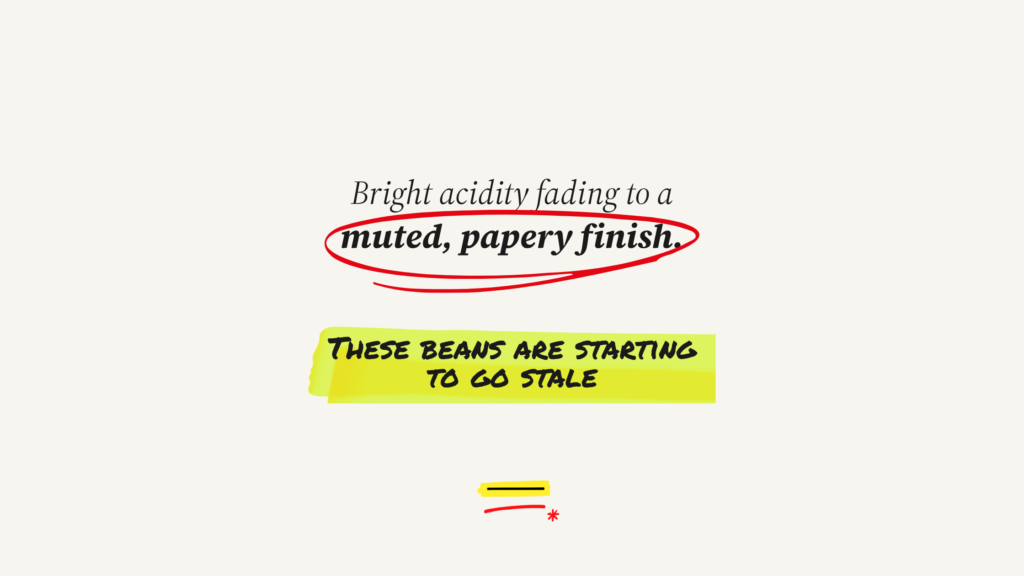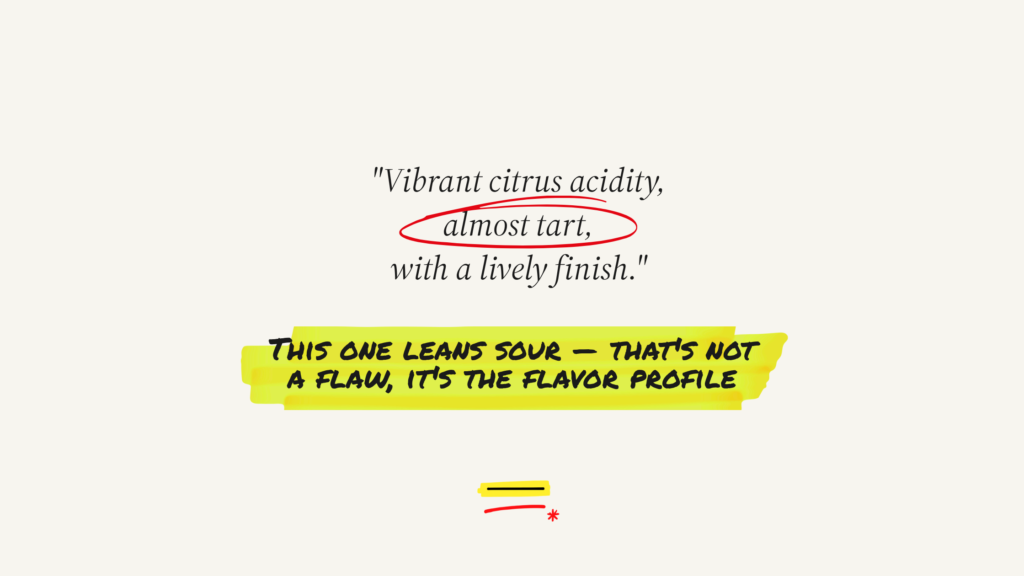
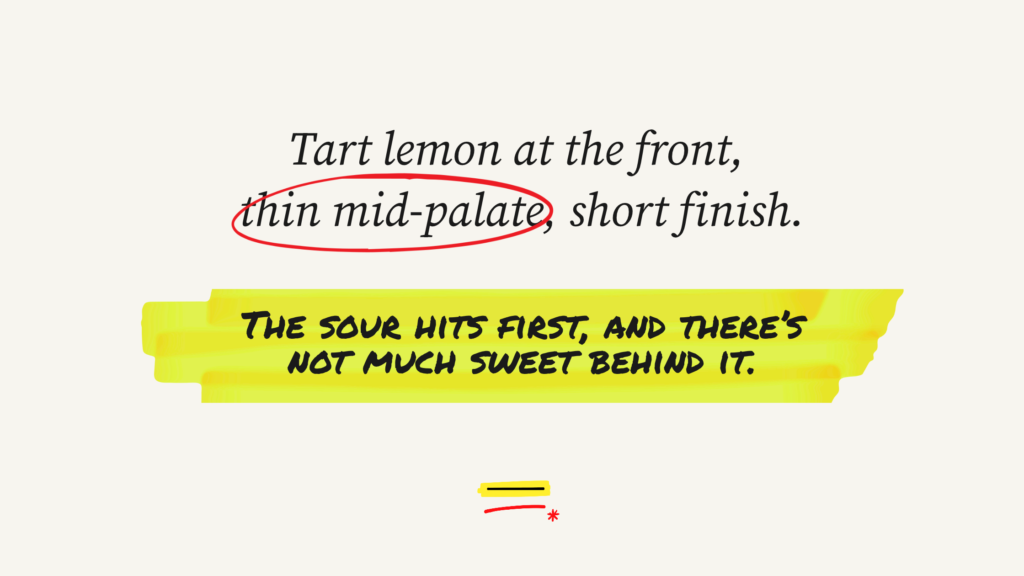
If your espresso tastes sharp, tart, or a little like biting into a lemon, here’s the short version: the shot is almost always coming out too fast. The water is rushing through the coffee before it has time to pick up the sweet, round flavors, so what lands in your cup is mostly the sour part. It’s rarely a bad machine, a bad bean, or a bad you.
The good news is that this one is usually fixable with a single small change. Let’s get you there.
Why sour is the first thing you taste
Think of coffee as having two sides: the sharp, tangy flavors and the sweet, rich ones. The sharp ones come out of the coffee first. The sweet ones take a little longer.
If the water doesn’t spend enough time with the coffee, you only get the first side. That’s why sour espresso often tastes thin as well. There’s a punch at the front, and then nothing behind it to catch you.
If you’ve ever searched this online, you’ve seen people describe it as unstoppable: every shot, nearly every time, and they can’t taste anything else. Others say the sourness seems to move around, sometimes up front, sometimes at the back, and that’s confusing in its own way. If that sounds like you, it doesn’t mean you’re making random mistakes. It usually means the shot is landing just short.
Sour or just bright? Here’s the quick test
Not all tartness is a problem. Some coffees are meant to taste fruity and zingy, and espresso makes that stronger. So before you change anything, ask one question: is there any sweetness behind it?
If the tang is followed by something rounder, a little sugary or chocolatey, that’s a bright coffee doing its job. If it’s sour and then it just stops, something is off. That second one is what this article is about.
Cause one: the water is running through too fast
The most common reason is that the coffee is ground too coarse for your machine, so the water slips through instead of taking its time.
You can usually spot it without any gadgets. The espresso comes out quickly, looks pale and a bit watery, and tastes sharp with very little body. It doesn’t have that thick, slow, syrupy look people expect from a good shot.
Nobody hands you a manual for this. You buy a machine, you buy a grinder, and the grinder comes set to “whatever.” So if you’ve never touched that setting, it’s worth knowing it’s the first suspect.
Cause two: the beans are very fresh, or very light
Here’s one people rarely hear. Coffee that was roasted only a few days ago can taste sour, even if you do everything right. It needs a little time to settle after roasting, and espresso tends to be the pickiest about it. Many people wait about a week or two before it tastes its best.
Very light roasts can do the same thing. They’re meant to taste brighter, and they often take more patience to get sweet. If you recently switched to a lighter bag and the sourness arrived with it, that’s a clue.
A tasting note, translated
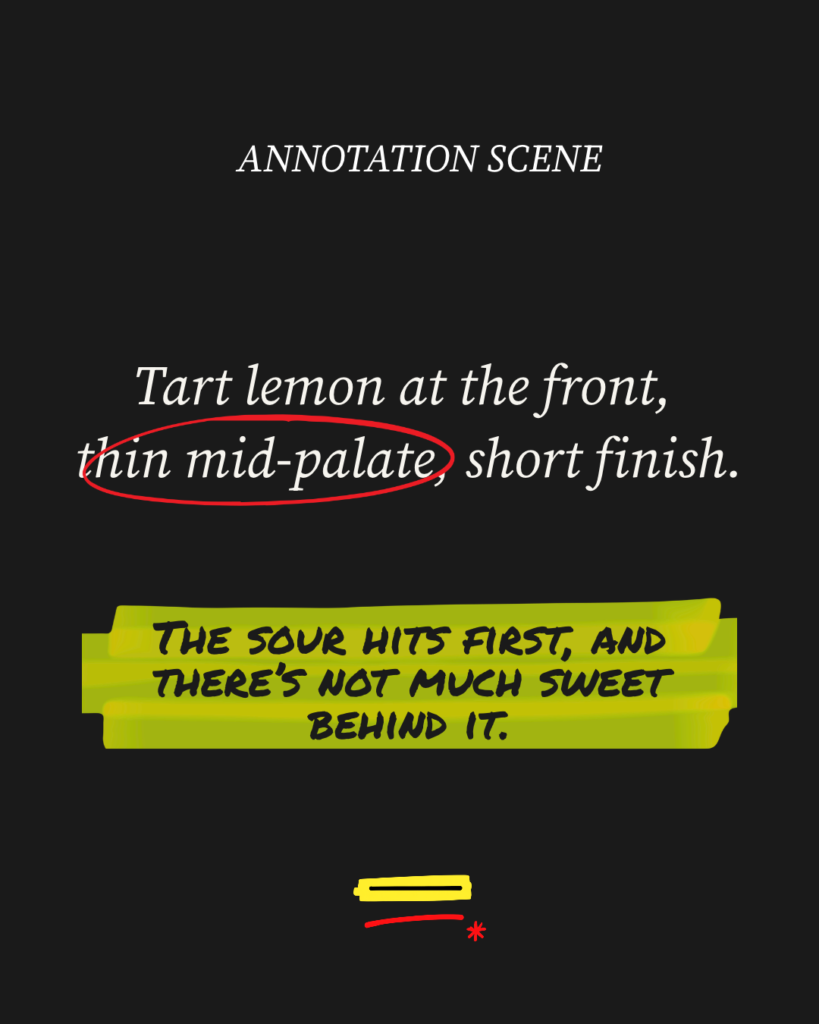
Bags love to describe coffee in a way that sounds delicious and tells you nothing. Here’s one you might run into, and what it actually means.
Notice that this note isn’t describing a bad coffee. It’s describing a shot that stopped too early. That’s the exact feeling we’re trying to fix.
How to tell which one it is
You don’t need any equipment for this. Just look at the bag.
Check the roast date. If the coffee was roasted just a few days ago, the beans may simply need more time, and the grind may be fine. If it was roasted a couple of weeks ago and your espresso is still coming out fast and sharp, the grind is a much better suspect.
If you can’t find a roast date at all, that tells you something too. Coffee without a date is hard to troubleshoot, because you can’t tell how old it is.
The one change to try tomorrow
If the beans have had time to rest, change one thing: make your grind one notch finer. Just one.
Then pull a shot and taste it. Don’t change anything else at the same time. If you adjust the grind, the amount of coffee, and the timing all in one morning, you’ll never know which one helped.
If it’s still sour, go one more notch the next day. If it swings the other way and turns bitter, you’ve gone a step too far, so go back one. (We cover that side in our guide to bitter espresso.)
That’s the whole move. It sounds almost too simple, but small changes are how most people get out of the sour cup.
What if it still tastes off?
Sometimes it isn’t one thing. Your machine might run cooler than you think, the beans might be on the edge of too fresh, and your own palate might be tired that day, all at once. When several things are happening together, it gets hard to know which one to touch first, and guessing can send you in circles.
That’s not a failure on your part. It’s just what happens when there’s more than one variable, and it’s exactly the kind of case where a personal read on your cup is more useful than a general guide.
Not sure which one’s happening to you? Get a free, personalized read on your cup, with no jargon, just a plain-English answer. Start your free diagnosis.