You bought a bag that promised something specific — maybe “juicy blackberry” or “honey and toasted almond” — and what’s in your cup tastes like… coffee. Just coffee. Before you assume something’s wrong with your palate, or your gear, or your technique, it’s worth understanding where those notes actually come from, because it’s probably not what you think.
Those notes were written under conditions you don’t have
Tasting notes on a bag are usually written by a professional cupper, tasting the coffee under very specific, controlled conditions: exact water, precise temperature, calibrated equipment, and a tasting process designed to pull out every possible flavor the coffee is capable of showing. It’s closer to a lab test than to a cup of coffee made in a normal kitchen on a normal morning.
Your kitchen isn’t that lab. Your water is different, your brew method is different, and you’re drinking it in the middle of your actual life instead of in a quiet room built for tasting. None of that means you’re doing it wrong. It means you’re comparing two genuinely different experiences and expecting them to match.
Your palate probably isn’t broken
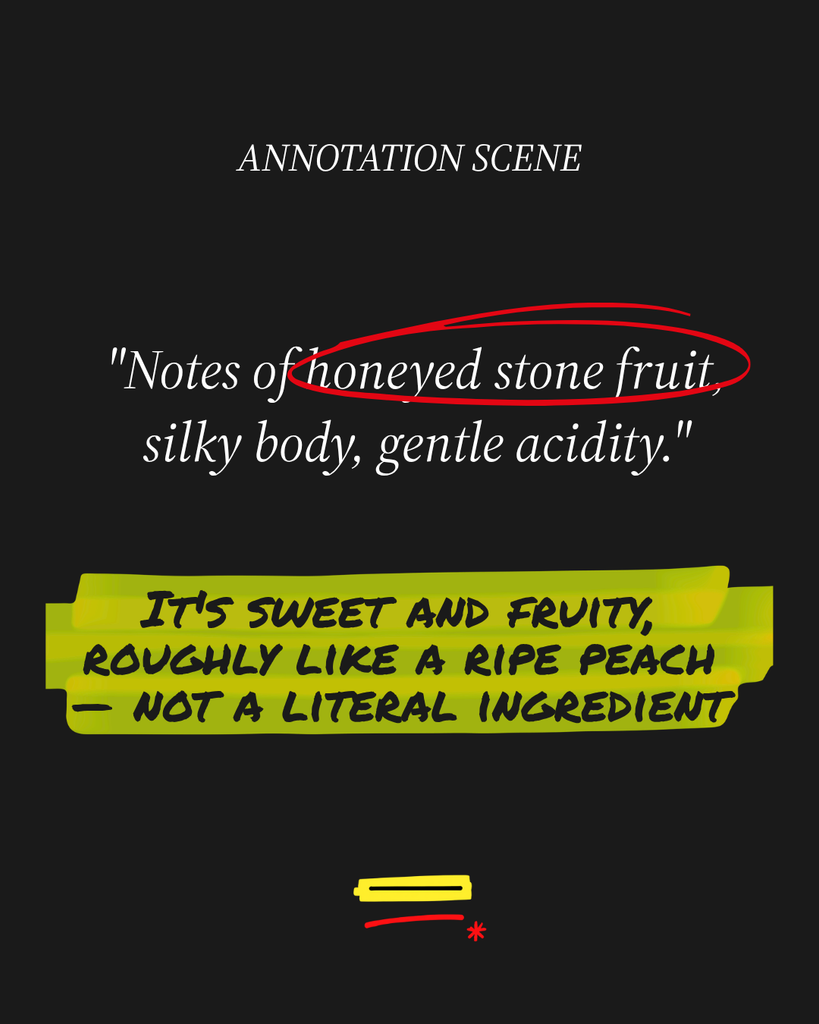
This is worth saying directly: if you can’t taste “blackberry” in your coffee, that doesn’t mean your sense of taste is worse than a professional’s. Flavor notes are also somewhat subjective in the first place — they’re one trained person’s impression of the coffee, not an exact, universal formula baked into the beans. Two experienced tasters can disagree on the same cup. Expecting to reliably taste the exact same thing they wrote down is setting yourself up to feel like you’re failing at something that was never fully objective to begin with.
A simpler question than “does this taste like blackberry?”
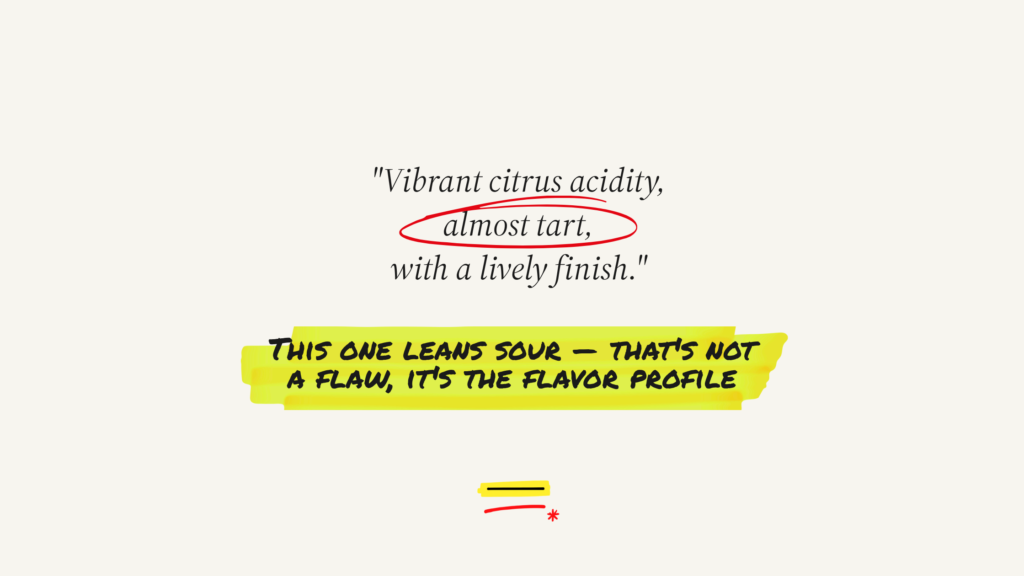
Chasing the exact word on the bag is often the wrong goal. A more useful question is a simpler one: does this taste brighter or heavier? Delicate or intense? Sweet or more savory? These broad, plain comparisons tell you almost as much as the fancy note does, without requiring you to identify a specific fruit you may never have tasted next to coffee before in your life.
If you can answer those simpler questions about a cup, you actually understand more about what you’re drinking than someone who’s just repeating the words on the bag without noticing anything themselves.
There isn’t a single fix here, and that’s honest
Unlike a lot of coffee problems, this one doesn’t have a one-step solution, because the gap between “what’s written” and “what you taste” comes from several things at once — the conditions the note was written under, the natural subjectivity of tasting language, and the simple fact that your palate is your own, shaped by everything you’ve ever eaten and everything you’re eating around it. No adjustment to your grind or your water is going to close that gap completely, and it’s not supposed to.
What actually helps over time
The more useful skill isn’t matching the bag’s exact words — it’s building your own vocabulary for what you’re tasting, even if it’s just “brighter than yesterday’s bag” or “heavier, coats my mouth more.” That’s a real, personal reference point, and it gets more useful the more cups you compare against it. Some people find it easier to build that vocabulary with a small reference — something like a pocket-sized glossary that translates the fancier bag language into plain terms — just to have a shared starting point instead of guessing at what a word like “honeyed” is supposed to mean.
Not sure which one’s happening to you? Get a free, personalized read on your cup — no jargon, just a plain-English answer. Start your free diagnosis.