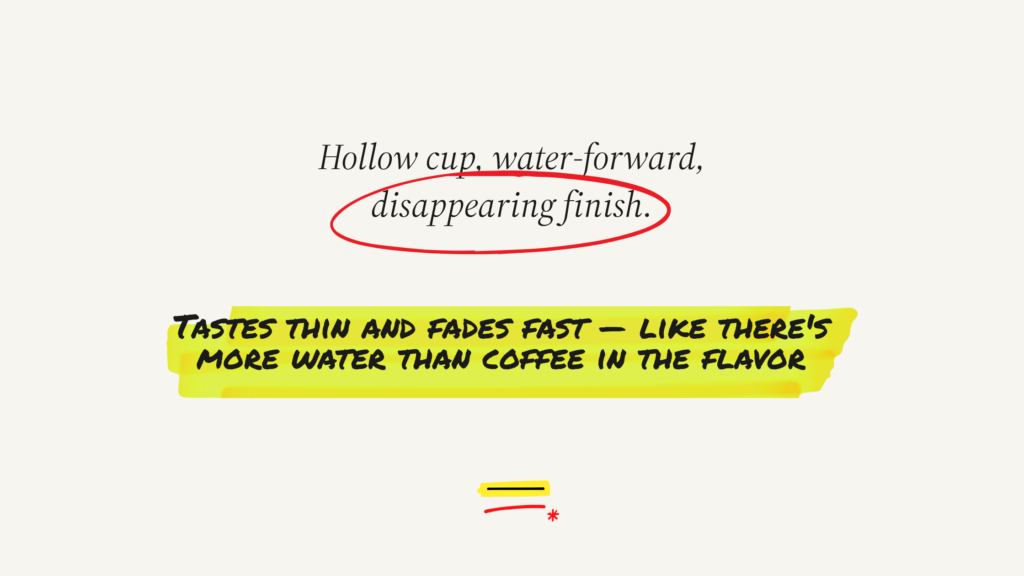
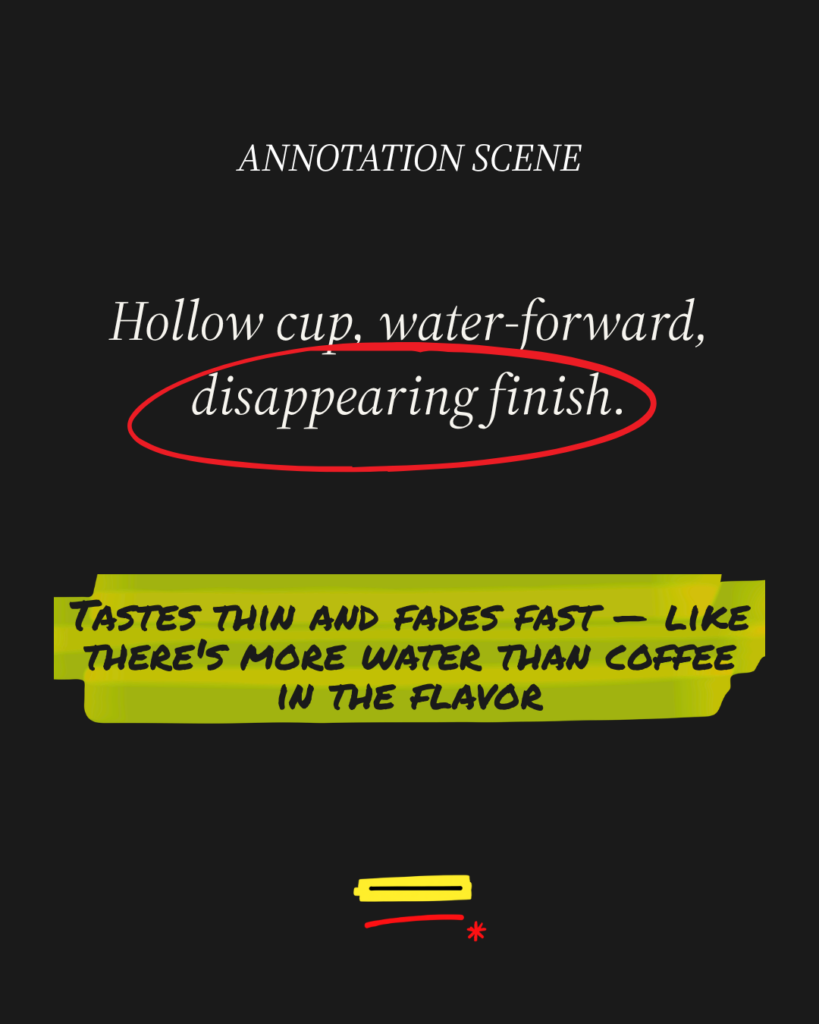
You did everything you were supposed to do. You weighed your beans, you weighed your water, you used the same scoop you always use. And the cup still tastes… thin. Flat. Like coffee-flavored water instead of actual coffee. If you’re double-checking your measurements and coming up empty for an explanation, here’s the good news: you probably didn’t do anything wrong.
The most likely cause has nothing to do with technique
When a cup tastes flat despite careful measuring, the first place to look isn’t your method — it’s the bag. Coffee doesn’t stay the same from the day it’s roasted. It has a window where it tastes bright and full, and after that window closes, it starts to fade. Not go bad, exactly — just quieter. Less character. The flavor is still technically there, but it’s like turning down the volume on a song you used to love.
This is easy to miss because nothing about the coffee looks different. The beans look fine, they smell like coffee, they’re not moldy or off. They’ve just lost some of what made them interesting, and that loss reads on the tongue as “flat” or “watery,” even when your water amount was exactly right.
Check the roast date before you check anything else
Grab the bag and look for a roast date — not a “best by” date, which can be months out and isn’t useful here. If the roast date is more than three or four weeks old, that’s very likely your answer. Coffee doesn’t have to be days-fresh to taste good, but by the time it’s a month or more past roasting, a lot of people notice exactly the flatness you’re describing.
What about cold brew? It’s a little different
If your flat cup is cold brew, there’s a second, very common explanation worth ruling out separately: dilution. Cold brew is often made as a concentrate and then stretched with water, milk, or ice, and it’s easy to go a little heavy on the dilution without meaning to. Too much water and the result tastes exactly like an old-roast cup does — thin, muted, like the coffee got lost somewhere along the way.
The way to tell these two things apart is simple: taste your cold brew concentrate on its own, undiluted, before you add anything to it. If the concentrate itself tastes rich and full, your issue is dilution, and the fix is just adding less water or ice next time. If the concentrate itself already tastes flat, that points back to the beans and their age, not how you diluted it.
Why nobody tells you this
Most brewing guides focus entirely on your process — grind size, water amount, brew time — because that’s the part that feels controllable and teachable. The roast date sits quietly on a sticker most people glance past, so it rarely gets blamed, even though it’s often the bigger factor. You’re not failing at a skill here. You’re running into a variable that isn’t really about skill at all.
The one thing worth trying today
Rather than second-guessing your whole setup, start here: check the roast date on your current bag, and next time you buy coffee, buy less of it. A smaller bag that you finish in two weeks will consistently taste more alive than a large bag that sits around for a month, even if the large bag was objectively “better” coffee on the day it was roasted. Buying smaller and more often is a small habit change that solves this more reliably than any brewing adjustment.
If your current bag is already a few weeks in, you don’t need to throw it out — it’s not unsafe, it’s just past its best stretch. But it’s worth noticing that this bag is the reason for the flatness, not something you did while brewing it.
It’s not you, it’s the clock
There’s something oddly reassuring about learning that a “flat” cup is usually a timing issue rather than a mistake. You didn’t mismeasure. You didn’t do the pour wrong. The coffee simply had a shelf life, and it ran past it a little. That’s not a flaw in your setup — it’s just something nobody put on the label in plain terms.
Not sure which one’s happening to you? Get a free, personalized read on your cup — no jargon, just a plain-English answer. Start your free diagnosis.